

 Important People
Important Dates in Internet History
Important Dates in the History of Commerce on the Internet

Important People
Important Dates in Internet History
Important Dates in the History of Commerce on the Internet
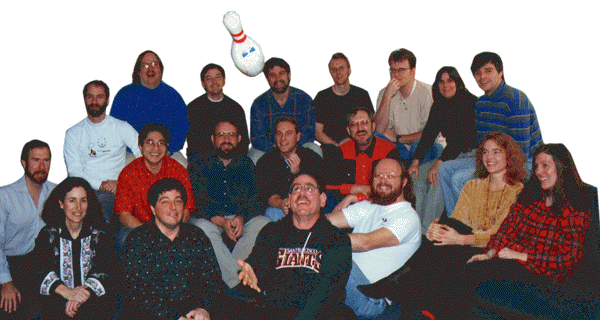
 Marc Andreessen, (left) a computer designer in his twenties, helped create the path breaking browser Mosaic
in 1993 while as an undergraduate student at the University of Illinois at Urbana-Champaign. In those days, Mosaic was one of the few graphic-smart programs for viewing WWW pages on the Internet. Andreessen was one of
seven members of the original Mosaic development team at the National Center for Supercomputer Applications at the university. In 1994, Andreessen co-founded a company, now named Netscape Communications Corporation, with James H. Clark, founder of Silicon Graphics Inc. One of the primary aims of Netscape Communications is to develop tools for navigating cyberspace.
Marc Andreessen, (left) a computer designer in his twenties, helped create the path breaking browser Mosaic
in 1993 while as an undergraduate student at the University of Illinois at Urbana-Champaign. In those days, Mosaic was one of the few graphic-smart programs for viewing WWW pages on the Internet. Andreessen was one of
seven members of the original Mosaic development team at the National Center for Supercomputer Applications at the university. In 1994, Andreessen co-founded a company, now named Netscape Communications Corporation, with James H. Clark, founder of Silicon Graphics Inc. One of the primary aims of Netscape Communications is to develop tools for navigating cyberspace.
 Tim Berners-Lee, (right) is the inventor of the World Wide Web initiative which he started in 1989 for his own use as a researcher at th
e European Laboratory for Particle Physics Üknown as CERN Üin Switzerland.
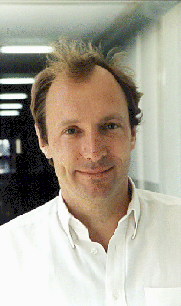
Tim Berners-Lee, (right) is the inventor of the World Wide Web initiative which he started in 1989 for his own use as a researcher at th
e European Laboratory for Particle Physics Üknown as CERN Üin Switzerland. Berners-Lee has a background in text processing, real-time software, and communications. He developed his first hypertext system, 'Enquire," in 1980. Soon after developing the WWW Berners-Lee first specified in 1991 the Hypertext Markup Language as part of the WWW initiative to facilitate communication among high-energy physicists. The specification continued to evolve quickly to meet the requirements of the WWW community. What began as an electronic library system for a group of physicists has turned into an international bazaar of information. Berners-Lee was responsible for the development of three standards which get documents woven into the WWW. One, URLs Ü uniform resource locators Ü are the standard for pointing to documents anywhere on the Internet. Two, HTML--hypertext mark-up language --is the standard for highlighting documents with URLs to hyperlink them to other documents in the WWW. Three, HTTP--hypertext transfer protocol--is the standard for transferring hyperlinked documents from WWW servers to WWW clients.
Berners-Lee left CERN to found the World Wide Web Consortium (W3C), which has centers at CERN and MIT. MIT made sense to Berners-Lee as a home base partly because the center of gravity of Internet research is in the US, and partly because MIT has a track record of honorable consortium behavior with industry to develop broadly useful, public standards such as X Windows.
Recent development of the WWW is due largely to the efforts of Berners-Lee and Massachusetts Institute of Technology (MIT)'s Laboratory of Computer Science (LCS). T he W3C is a vendor-neutral forum for developing and formalizing WWW standards. The goals of the consortium, which Berners-Lee directs, are to coordinate development of the WWW and to maintain its interoperability over time, without any major discontinuit ies. The W3C also conducts research to determine the WWW's future and provide reference implementations of WWW software. The consortium also hopes to address security issues, such as message integrity, authentication and privacy.
 Vannevar Bush (1908-1974), (left) an electrical engineer at MIT and an influential science adviser to President Roosevelt
and the federal government during and after World War II. Bush was the originator of the concept of hypertext. In 1945, Bush proposed MEMEX, a conceptual machine that can store vast amounts of information, in which users have the ability to create infor
mation trails, links of related texts and illustrations, which can be stored and used for future reference. Bush was Claude Shannon's mentor. Shanon formulated the information theory that included a definition of the concept of information, an entropic m
easure of information, and propositions about communication flow.
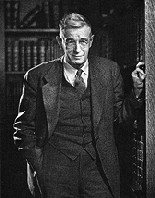
Vannevar Bush (1908-1974), (left) an electrical engineer at MIT and an influential science adviser to President Roosevelt
and the federal government during and after World War II. Bush was the originator of the concept of hypertext. In 1945, Bush proposed MEMEX, a conceptual machine that can store vast amounts of information, in which users have the ability to create infor
mation trails, links of related texts and illustrations, which can be stored and used for future reference. Bush was Claude Shannon's mentor. Shanon formulated the information theory that included a definition of the concept of information, an entropic m
easure of information, and propositions about communication flow.
 Vinton G. Cerf, (right) a computer scientist who is known throug
hout the industry as the primary force behind the development of the Internet. He has been called the Father of the Internet, and the King of the Internet.
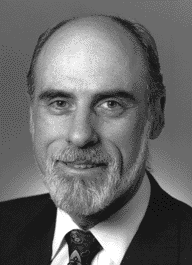
Vinton G. Cerf, (right) a computer scientist who is known throug
hout the industry as the primary force behind the development of the Internet. He has been called the Father of the Internet, and the King of the Internet.Cerf's hearing was severely impaired since birth. Although this loss largely corrected with hea ring aids, worn since age 13, it was awkward for Cerf during telephone conversations when he missed the name of a caller or someone expected to be recognized by voice.
According to Cerf, "I may flounder a bit and often resort to tricks to figure out w ho the heck it is." No tricks are required with E-mail. The ability to communicate over the computer has helped Cerf immeasurably. Ever since the 1970's, Cerf has worked to encourage deaf people to use personal computers that handle E-mail. Cerf's wo rk in networking dates to 1969, when he was a graduate student in computer science at the University of California at Los Angeles. He was one of a handful of young programmers and hardware engineers involved in the inst allation of the first "node" of the original, four-node ARPAnet, the precursor to the Internet.
Cerf continued his work in networks while an assistant professor at Stanford Univer sity in the early 1970's, and in 1976 went to work for the Defense Advanced Research Projects Agency, leaving in 1982 to work on the design of MCI Mail, now one of the nation's largest E-mail systems.
In January 1994 after an eight-year absence, Cerf, returned to MCI to help the MCI Communications Corporation in an ambitious six-year, $20 billion project called networkMCI.
 James H. Clark, (left) the former Stanford University professor who founded Silicon Graphics Inc. in 1981 and turn
ed it into a leader in the work station market. In 1994 he formed a new company, now named Netscape Communications aimed at producing what he sees as computing's next big trend: navigating cyberspace.
James H. Clark, (left) the former Stanford University professor who founded Silicon Graphics Inc. in 1981 and turn
ed it into a leader in the work station market. In 1994 he formed a new company, now named Netscape Communications aimed at producing what he sees as computing's next big trend: navigating cyberspace.Clark is the co-founder of the company with Marc Andreessen, a 24-year-old computer designer who helped create Mosaic as an undergraduate student in University of Illinois at Urbana-Champaign. Clark's new company, based in Mountain View, Calif., has also hired six other members of th e original Mosaic development team from the National Center for Supercomputer Applications at the university.
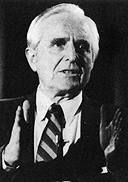 Doug Engelbart (left) is a legend in the computer wor
ld. The inventor of many common devices and ideas used in computing today, including ñWord Processing," "Word Processing," "Outline Processing," "Screen Windows," the mouse and "the text link." On November 21, 1969, a computer at Boelter Hall, home of t
he computer science department at University of California at Los Angeles, hooked up with another hundreds of miles away at Engelbart's lab at the Stanford Research Institute.
Doug Engelbart (left) is a legend in the computer wor
ld. The inventor of many common devices and ideas used in computing today, including ñWord Processing," "Word Processing," "Outline Processing," "Screen Windows," the mouse and "the text link." On November 21, 1969, a computer at Boelter Hall, home of t
he computer science department at University of California at Los Angeles, hooked up with another hundreds of miles away at Engelbart's lab at the Stanford Research Institute.
 Al Gore, (right) on January 14, 1994 became the first U. S. vice president to hold a live interactive news conference on an inte
rnational computer network. Gore has become the point man in the Clinton administration's effort to build a national information highway much as his father, former Senator Albert Gore, was a principal architect of the interstate highway system a generati
on or more earlier. The White House has taken a technological leap under Gore, who as a senator was known for his eagerness to embrace technology issues that many of his colleagues were reluctant to tackle. Mr. Go
re's electronic-mail address during his tenure: vice-president@whitehouse.gov.
Al Gore, (right) on January 14, 1994 became the first U. S. vice president to hold a live interactive news conference on an inte
rnational computer network. Gore has become the point man in the Clinton administration's effort to build a national information highway much as his father, former Senator Albert Gore, was a principal architect of the interstate highway system a generati
on or more earlier. The White House has taken a technological leap under Gore, who as a senator was known for his eagerness to embrace technology issues that many of his colleagues were reluctant to tackle. Mr. Go
re's electronic-mail address during his tenure: vice-president@whitehouse.gov.
 James Gosling, (right) of Sun Microsystems developed Java, an object-oriented language that resolves several of the World Wide Web's programming and functionality p
roblems. Gosling, regarded by some as "the world's greatest living programmer," originally designed Java for use in interactive TV. But realizing the interactive TV market to be a dead end, Sun has decided to use this technology on the Web. Java progra
ms allow animation to appear in Web windows, background music to play, and text to scroll across the screen in real time, just to name a few things.
James Gosling, (right) of Sun Microsystems developed Java, an object-oriented language that resolves several of the World Wide Web's programming and functionality p
roblems. Gosling, regarded by some as "the world's greatest living programmer," originally designed Java for use in interactive TV. But realizing the interactive TV market to be a dead end, Sun has decided to use this technology on the Web. Java progra
ms allow animation to appear in Web windows, background music to play, and text to scroll across the screen in real time, just to name a few things.
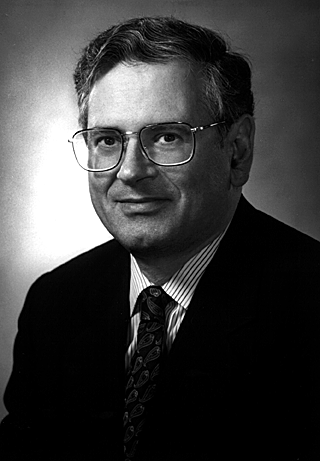 Robert E. Kahn, (left) coined the term "information infrastructure." He was responsible for the design and development of the ARPAnet at Bolt Beranek and Newman in the late 1960s. In 1972, he moved t
o Defense Advanced Research Projects Agency (DARPA), the former name of the Advanced Research Projects Agency and later became director of Information Processing Techniques Office of th
e DARPA. It was Kahn who initiated the billion-dollar Strategic Computing Program, the largest computer research and development program the U. S. government has ever undertaken. Many of the projects funded by agencies like the Office of Naval Research
derived their support from funds allocated by this program.
Robert E. Kahn, (left) coined the term "information infrastructure." He was responsible for the design and development of the ARPAnet at Bolt Beranek and Newman in the late 1960s. In 1972, he moved t
o Defense Advanced Research Projects Agency (DARPA), the former name of the Advanced Research Projects Agency and later became director of Information Processing Techniques Office of th
e DARPA. It was Kahn who initiated the billion-dollar Strategic Computing Program, the largest computer research and development program the U. S. government has ever undertaken. Many of the projects funded by agencies like the Office of Naval Research
derived their support from funds allocated by this program.In 1986, Kahn started with Vinton G. Cerf the Corporation for National Research Initiatives, a nonprofit organization, engaged in the design, research and development of an experimental info rmation infrastructure.
Kahn developed with Cerf a set of technical standards, called protocols, that multiple networks could use. That paved the way for Internet. It was a common language spoken by computers throughout the Internet. The first work on that language came from literally sketching the idea out on the back of an envelope in a San Francisco hotel in 1973 while Cerf and Kahn attended a computer conference.
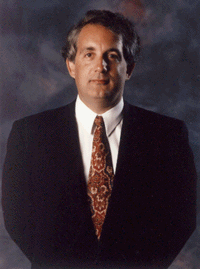 Mitchell David Kapor, (right) a co-founder of the Lotus Development Corporation, and co-authored with colleagues the Lotus 1-2-3 spreadsheet software program that helped ignite the personal computer revolution i
n the early 1980's. Mitch Kapor, as he is popularly known, was trained at MITÍs Sloan School of Management in 1979. Kapor who heads the Electronic Frontier Foundation, a public interest group on computer issues, is one of the Internet's strongest advoca
tes.
Mitchell David Kapor, (right) a co-founder of the Lotus Development Corporation, and co-authored with colleagues the Lotus 1-2-3 spreadsheet software program that helped ignite the personal computer revolution i
n the early 1980's. Mitch Kapor, as he is popularly known, was trained at MITÍs Sloan School of Management in 1979. Kapor who heads the Electronic Frontier Foundation, a public interest group on computer issues, is one of the Internet's strongest advoca
tes.
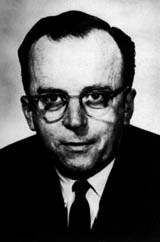 Joseph Carl Robnett Licklider(1915-1990), (left) a talented psychologist, became the first director of Information Processing Research and Behav
ioral Science at ARPA from 1962 to 1964. In those days, ARPA's computer unit was within Command and Control; Research and it was later renamed IPTO, the Information Processing Techniques Office.
Joseph Carl Robnett Licklider(1915-1990), (left) a talented psychologist, became the first director of Information Processing Research and Behav
ioral Science at ARPA from 1962 to 1964. In those days, ARPA's computer unit was within Command and Control; Research and it was later renamed IPTO, the Information Processing Techniques Office.Licklider had a strong feeling that the computer's stren gth was as a communications device, rather than an arithmetic aid. He and Robert Taylor thought of ways to make computers more efficient by connecting them in networks. In 1968, Licklider and Taylor published a paper suggesting that computers could serv e as communication devices. They pushed for an experimental network, one that would create new communities of scientists separated by geography but united by technology (Kantrowitz and Rogers, 1994).
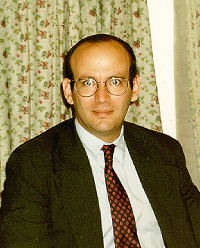 Carl Malamud, (right) acted as a cyber Santa on the Internet in 1993. He got the idea when someone asked him if Santa w
as on the Internet. When he could not find one, he decided to be it. Malamud was then the president of the Internet Multicasting Service, a Washington-based nonprofit group devoted to Internet services such as putting on-line everything from government
documents to broadcasts of National Public Radio.
Carl Malamud, (right) acted as a cyber Santa on the Internet in 1993. He got the idea when someone asked him if Santa w
as on the Internet. When he could not find one, he decided to be it. Malamud was then the president of the Internet Multicasting Service, a Washington-based nonprofit group devoted to Internet services such as putting on-line everything from government
documents to broadcasts of National Public Radio. As cyber Santa, Malamud separated each morning children's requests from adults' and placed each piece of mail in categories--like a Porsche file, a Train file, a Thesis Trouble file (for anguished graduate students). His Santa could be reached at santa@north.pole.org or elves@north.pole.org. According to Malamud, the expanding reach of cyberspace was evident in the number of children with their own Internet addresses- -although most of them were using a parent's account, a lot of them had their own account.
Malamud has done several innovative things about the Internet; from authoring books to creating the 1996 World Exposition, of Internet Multicasting, First Virtual Banking, Internet Talk Radio, Internet Town Hall, Geek of the Week, etc. His ability to operate as a nonprofit organization is interesting and a testament to his ability to get people excited about the future of the World Wide Web.
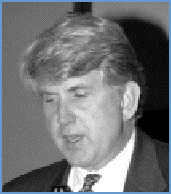
Bob Metcalfe
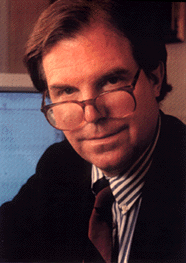
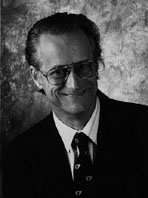 Ted H. Nelson, (right) is the inventor of many common ideas related to hypertext, including the words "hypertext" and "hypermedia." Nelson defined hypertext as "a body of written or pictorial material interconnected in [such] a complex way that it could not be conveniently represented on paper."
The principle of hypertext is to associate information through "links" into a coherent organization. Nelson has been designing computer text systems on his own since 1960, and may thus be considered one of the inventors of word processing. Nelson book Literary Machines 91.1 reports on the
Xanadu Hypertext System, a scheme for instantaneous publishing and archiving with broad implications designed for "children, researcher and heads of state."
Ted H. Nelson, (right) is the inventor of many common ideas related to hypertext, including the words "hypertext" and "hypermedia." Nelson defined hypertext as "a body of written or pictorial material interconnected in [such] a complex way that it could not be conveniently represented on paper."
The principle of hypertext is to associate information through "links" into a coherent organization. Nelson has been designing computer text systems on his own since 1960, and may thus be considered one of the inventors of word processing. Nelson book Literary Machines 91.1 reports on the
Xanadu Hypertext System, a scheme for instantaneous publishing and archiving with broad implications designed for "children, researcher and heads of state."
Internet History in a Nutshell: Major Events
Date
Event
1960's
Packet switching invented (Paul B
aran, Rand Corp wrote on "Distributed Communications Networks") 1967
Plan for packet switching presented at ACM Symposium on Operating Principles. 1969
commissioned by the Department of Defense for research into internetworking; first four computers connected 1970
nodes used Network Control Protocol (NCP) through Information Message Processors, developed by Bolt Beranek & Newman, Inc. (BBN) 1972
InterNetworking Worki
ng Group (INWG) created to establish standard protocols; Vinton Cerf--Chairman
1973
First international connections to : England and Norway 1976
UUCP (Unix to Unix Copy Protocol) developed at AT&T Bell Labs 1979
Usenet established using UUCP between Duke University
and University of North Carolina 1981
BITNET (Because It's Time Network) started at City University of New York; CSNET (Computer Science Network) es
tablished 1982
INWG establishes TCP/IP as the ARPAnet protocol suite; a href="http://www.dtic.dla.mil/defenselink/osd/">Department of Defense adopts the standard 1983
Name server deve
loped at University of Wisconsin; users are no longer required to know the exact path to other systems; splits into ARPAnet and MILnet 1984
Domain Named Server (DNS) introduced; hosts exceed 1,000 1986
NSFnet created with 56kbps backbone 1987
NSF contracts with Merit Network, Inc. (which contracts with IBM and MCI) to manage backbone 1989
NSFnet backbone upgraded to T1 (1.544Mbps);hosts exceed 100,000 1990
ARPAnet ceases to exist; Electronic Frontier Foundation (EFF) formed; Archie released 1991
Commercial Internet Exchange (CIX) formed WAIS released by Thinking
Machines Corp.; Gopher released by University of Minnesota 1992
Internet Society chartered; World-Wide Web released by CERN; NSFnet backbone upgraded to
T3 (44.736 Mbps); More than 1,000,000 hosts 1993
InterNIC created by NSF to provide a variety of Internet services; White House goes on-line; Internet receives media attention 1994
NSF redirects strategy, turning over network provision to private sector and abolishing commercial restrictions 1995
Commercial online services begin providing Internet access. Oth
er competitors join fray. Widespread use of the Internet in Government and Commercial sectors. 1996
Sun Microsystems' Java programming language emerges the hottest way to use the World-Wide Web. Serious Web surfers flock
to Java because it eliminates the need for Web browser add-ons, enabling users to open any type of file without outside assistance.
Chronology of Commerce on the Internet
Year
Major Events
1984
Apple launches Macintosh 1985
CD-ROM introduced 1986
GE Launches GEnie 1987
Voice Response introduced 1988
IBM and Sears launch Prodigy 1989
Internet backbone upgraded to T1 1990
Virtual Reality Emerges; Archie Released 1991
Gopher, WAIS released, The concept of Multimedia gains popularity. 1992
Internet backbone upgraded to T3 1993
NCSA introduces Mosaic, Telephone-cable merger frenzy/ Interactive television research and development; Five million homes online; CD-ROM industry
explodes 1994
The Internet hits the mainstream. History was made on August 11, 1994 when the first retail transaction on the Internet was carried out using a readily available version of powerful data encryption software
designed to guarantee privacy. 1995
Software companies develop security browsers for business on the Internet


This site was created especially for students of the UNC School of Journalism's
JOMC 050 Class, and anyone else who may be interested.
For more information, please contactdaikat@email.unc.edu