|
Specifications for
Refurbishing the Interior: Materials: Leather covers for seats. Seat bottoms made
of Conforfoam—the same stuff as Temperfoam. Effectively for this discussion, as Category
23, Part 91 operations, we are bound by 23.853(a), (b), (c), and (e); not (d)
and (f). · We can use any interior materials we wish,
as long as they are "flame-resistant." · "Flame-resistant" is defined in
FAR 1. AC 23-2, Section 4(b)
provides guidance concerning acceptable means, but not the only means, of
complying with the FAR 1 definition of "flame-resistant." These
procedures mimic FAR 23 Appendix F Section (e), the "horizontal
test." Given these facts, appears that an owner can install an interior
into their Part 91 aircraft, using any materials that meet the definition of
"flame resistant." Strip seats to bare frames, perform a
complete mechanical and structural inspection, and repair as required. Install heavy sling reinforcement straps on
seat frames and reinstall the original seat sling. This keeps the sling from
stretching or coming loose from the frame, and eliminates future sagging.
Build the height of the seat back structure to accommodate my stature (I’m
choosing this as an alternative to headrests). Build new seat foam, shaping with several
densities of flame retardant foam. The new foam is contoured to fit me as
determined by measurements taken earlier. Clean, mask, prime, and paint all
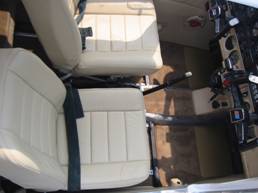
seat frames to match the new interior color scheme. Sew and fit the new seat upholstery.
Tufting is done with hidden sewn-in rods and pulls to insure long-term
structural integrity, eliminating sagging and shifting. All seams are double
lock stitched to prevent splitting. All seat panels have backing foam and
backing fabric to insure proper fill. Factory cardboard panels are replaced with
new .020" aluminum panels; metal panels are repaired to be like-new
condition, or made new. Install new multi-density insulation behind side
panels, in doors and behind headliner. Cut and fit new carpets for cabin floor,
baggage compartment and related surfaces. Special attention must be given to
allow for easy removal and reinstallation without removal of seats. Serge all carpet edges; sew on velcro and
heel pads. Insulate the underside of the floor carpets with heavy density,
flame-retardant foam. Bond velcro to floors, install new carpet. On the
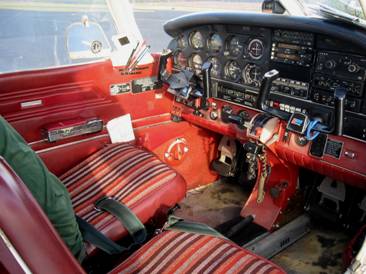
insulation and checking all the wiring. If you carefully remove the old
insulation and number each panel and its counterpart space on the airframe,
you will have an easier time. Use the old insulation as a template for
cutting the new insulation (use an electric carving knife) and it will make
it easier to fit everything back into place. On top of the list is
fireproofing and making sure that all materials meet specifications. We chose
to go with high quality leather and sent samples to
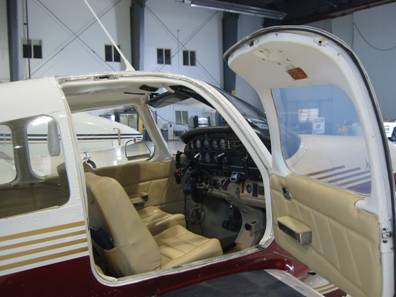
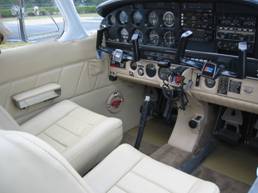
Skandia burn laboratory for final approval. The upholsterer did a great job
taking everything down to the frame, painting the seat frames, adding new
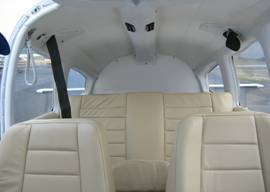
padding and sewing up the leather. The side panels, back bulkhead are also
done in leather. Headliner is replaced with a new one and all plastic parts
are replaced or refurbished. New aircraft carpeting throughout. |

|
N40842 |